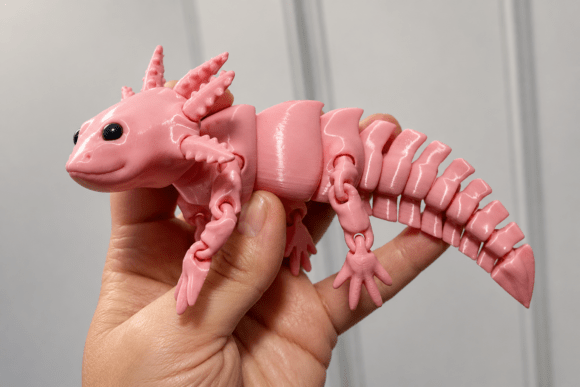
Articulated Flexi Axolotl: A 3D Print for Focus and Fun
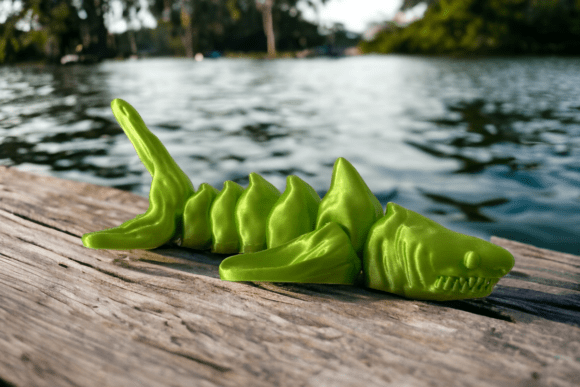
In an environment where digital distractions are constant and screen fatigue is a genuine productivity hurdle, physical objects that offer tactile engagement have regained significant value. The Articulated Flexi Axolotl represents more than just a novelty item; it is a practical tool for stress management, a conversation starter in professional settings, and an accessible entry point into the world of additive manufacturing. This fully articulated model, designed specifically for smooth movement and satisfying flexibility, bridges the gap between functional fidget tools and high-quality collectibles.
For professionals, educators, and creators aged 20 to 50, the appeal lies in its dual nature. It serves as a discreet mechanism for maintaining focus during long meetings or deep work sessions, while simultaneously acting as a charming desk companion that humanizes a workspace. Unlike mass-produced plastic toys, a 3D-printed axolotl carries the nuance of custom fabrication, allowing for personalization that resonates with individual style and brand identity.
Enhancing Focus Through Tactile Engagement
The primary utility of the Articulated Flexi print in place Axolotl is its ability to provide a constructive outlet for restless energy. In high-pressure roles, such as marketing strategy or software development, the need for a non-disruptive physical anchor is common. The smooth, flexible tail movement and the segmented body allow for repetitive, soothing motion that can help ground the mind without breaking concentration.
Consider a scenario during a lengthy video conference. While listening to a presentation, subtly manipulating the axolotl's limbs or rolling its segments can satisfy the urge to fidget, preventing the distraction of checking phones or tapping pens loudly. This kinetic activity often aids cognitive processing, allowing the brain to remain engaged with auditory information while the hands occupy themselves. The snap-fit head connection ensures durability, meaning the toy can withstand daily manipulation without losing its structural integrity, making it a reliable long-term companion for your desk.
A Gateway to Accessible 3D Printing
For hobbyists and small business owners looking to explore 3D printing without a steep learning curve, this model is an ideal starting point. One of the most significant barriers to entry in 3D printing is the complexity of support structures and post-processing. The Articulated Flexi Axolotl is explicitly optimized to eliminate these hurdles. It prints in place, requiring no supports and no assembly beyond the initial removal from the build plate.
This "beginner-friendly" design does not compromise on quality. The geometry is engineered to handle clean overhangs, ensuring that the final output looks professional straight off the printer. For educators, this makes it a perfect classroom project. Students can learn about tolerance, layer adhesion, and mechanical articulation without the frustration of failed prints or tedious cleanup. The result is a high-detail cute design that validates the learner's effort immediately, encouraging further exploration into design and engineering principles.
Customization and Brand Expression
In the realm of content creation and entrepreneurship, visual distinctiveness is currency. The Articulated Flexi Axolotl offers exceptional potential for multicolor printing, a feature that savvy marketers and bloggers can leverage for brand alignment. By utilizing filament swaps or multi-material printers, you can produce axolotls that match specific corporate color schemes, team logos, or seasonal themes.
Imagine handing out these customized figures at a industry meetup or including them as part of a premium client gift package. They serve as memorable tokens that stand out against standard promotional merchandise like pens or notebooks. The unique charm of an amphibian-themed fidget toy sparks curiosity and conversation, effectively strengthening communication and leaving a lasting impression. Because the design is open to interpretation through color, it adapts seamlessly to various aesthetic goals, from pastel minimalism to vibrant, eye-catching patterns.
Practical Considerations for Users
While the benefits are clear, approaching this project with realistic expectations ensures satisfaction. The "print in place" technology relies on precise tolerances between the moving parts. If your 3D printer is not well-calibrated, the joints may be too tight, restricting movement, or too loose, causing the segments to separate easily. It is advisable to run a calibration test before committing to a full batch, especially if you intend to use these for commercial purposes or gifting.
Material choice also plays a critical role in the final experience. PLA (Polylactic Acid) is the standard recommendation due to its ease of use and crisp detail retention, which highlights the high-detail cute design of the axolotl. However, for users seeking a softer, more rubbery feel that mimics the organic nature of a real axolotl, TPU (Thermoplastic Polyurethane) can be an excellent alternative, provided the printer is capable of handling flexible filaments. TPU will enhance the "satisfying flexibility" mentioned in the design specs, offering a different tactile profile that some users may prefer for stress relief.
Furthermore, while the snap-fit head connection is robust, it is a mechanical joint. Users should be mindful of excessive force when twisting the head, as repeated extreme rotation could eventually wear down the locking mechanism. Treating the model as a precision instrument rather than a rugged plaything will extend its lifespan significantly.
Ideal Use Cases and Audience Fit
Who benefits most from integrating an Articulated Flexi Axolotl into their routine? The scope is broader than one might initially assume:
- Freelancers and Remote Workers: Those working in isolation often miss the casual physical interactions of an office. A dynamic desk object provides a sense of presence and a focal point during solitary work hours.
- Educators and Therapists: The predictable, rhythmic movement of the articulated body can be calming for individuals with anxiety or attention differences, serving as a non-verbal tool for emotional regulation.
- 3D Printing Enthusiasts: For those building a portfolio, this model demonstrates competence in handling complex geometries and optimization for printability without support material.
- Gift Givers: Finding unique gifts for amphibian lovers or tech-savvy friends can be challenging. This item hits the intersection of biology appreciation and technological novelty, making it a thoughtful and personalized present.
It is also worth noting that while the design is optimized for clean results, the layer lines inherent to FDM 3D printing contribute to the texture of the object. Some users find this textured grip preferable for fidgeting, while others accustomed to injection-molded smoothness might notice the difference. Understanding this distinction helps in setting the right expectation: this is a piece of manufactured art, bearing the marks of its creation process, which adds to its authenticity.
Conclusion: More Than Just a Toy
The Articulated Flexi print in place Axolotl succeeds because it solves multiple problems with a single, elegant solution. It addresses the need for tactile stimulation in a digital age, lowers the barrier to entry for 3D printing experimentation, and offers a versatile canvas for creative expression. Whether placed on a standing desk to break up the monotony of a workday, used as a teaching aid to demonstrate mechanical principles, or gifted to a colleague as a gesture of goodwill, its value extends far beyond its physical form.
By choosing a design that prioritizes smooth movement, clean printing, and durable construction, users invest in a tool that supports mental clarity and creative flow. In a market saturated with disposable items, the articulated axolotl stands out as a durable, engaging, and meaningful addition to any professional or personal space. Its simplicity belies its effectiveness, proving that sometimes the best tools for improving efficiency and well-being are the ones we can hold in our hands.