Illuminating Faith: A Practical Guide to the Jesus Nazarene Lightbox Paper Cut
In the realm of devotional art and modern crafting, few mediums bridge the gap between traditional reverence and contemporary design as effectively as layered paper cutting. Among the various designs gaining traction among creators and faith communities, the Jesus Nazarene Lightbox Paper Cut stands out for its ability to transform a flat digital file into a three-dimensional spiritual focal point. This article evaluates the utility, aesthetic potential, and practical application of this specific design asset, offering a grounded perspective for hobbyists, small business owners, and church leaders considering its integration into their projects.
Understanding the Design Architecture
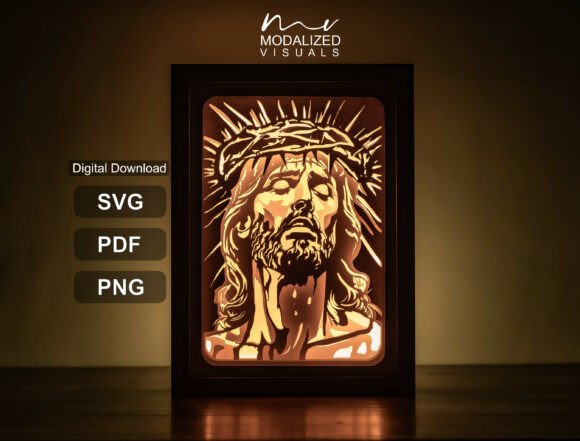
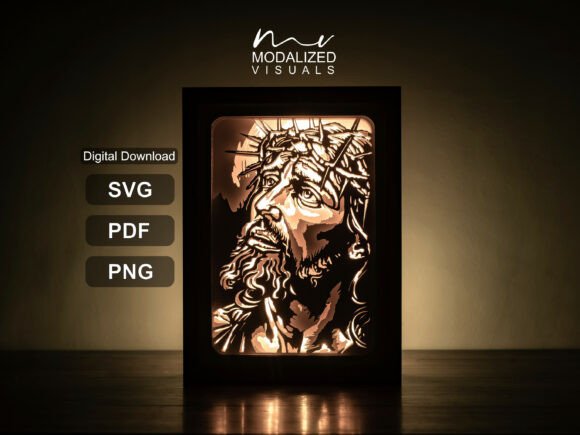
At its core, the Jesus Nazarene Lightbox Paper Cut is not merely an image; it is a structural blueprint for depth. Unlike standard prints that rely solely on ink and color, this design utilizes a multi-layered approach where each stratum of paper contributes to the overall composition. When backlit, these layers cast shadows against one another, creating a gradient of light and dark that mimics the chiaroscuro technique found in classical painting.
The subject matter—Jesus of Nazareth—is rendered with a focus on serenity and approachability. The design typically isolates key facial features and symbolic elements, such as the crown of thorns or a halo of light, distributing them across different planes. For the creator, this means the file is engineered for precision. A well-constructed file will have clean vector paths, ensuring that when cut on machines like Cricut or Silhouette, the intricate details do not tear or fray. The value here lies in the engineering of the layers; if the spacing between layers is not accounted for in the design phase, the shadow effect can become muddy rather than ethereal.
Technical Usability and Workflow Integration
For professionals and serious hobbyists, the usability of a digital asset is paramount. The Jesus Nazarene Lightbox Paper Cut is generally distributed in formats compatible with industry-standard cutting software, such as SVG, DXF, or PNG. This compatibility ensures a smooth workflow whether you are using a desktop computer or a mobile tablet to drive your cutting machine.
From a production standpoint, the consistency of the cut is critical. High-quality versions of this design separate complex areas into manageable pieces, reducing the risk of "weed-out" failures where tiny details are lost during the weeding process. For entrepreneurs looking to sell finished lightboxes, this reliability translates directly to reduced material waste and higher throughput. However, users should be aware that the complexity of the design demands high-quality cardstock. Standard printer paper often lacks the rigidity needed to maintain the structural integrity of the layers, leading to bowing that disrupts the lighting effect. A weight of 65lb to 80lb cardstock is typically recommended to balance flexibility with stiffness.
Lighting Considerations and Material Selection
The effectiveness of any lightbox project hinges on the interaction between the paper and the light source. The Jesus Nazarene Lightbox Paper Cut is designed to diffuse light, not block it entirely. Therefore, the choice of paper color and texture significantly impacts the final output. Warm white or cream-colored papers tend to enhance the "peaceful glow" associated with religious imagery, whereas stark white can sometimes feel too clinical. Conversely, using colored layers can add depth but requires careful testing to ensure the colors do not mute the LED illumination behind them.
Regarding the light source itself, LED strips or panels with adjustable color temperatures offer the most control. A cooler light (5000K) might highlight the crispness of the cuts, while a warmer light (3000K) reinforces the devotional, candle-like atmosphere often desired in prayer corners. The layered nature of the design allows for experimentation; moving the light source closer to the back layer intensifies the shadows, while pulling it back softens the transition between layers.
Target Audience and Practical Applications
Who benefits most from incorporating the Jesus Nazarene Lightbox Paper Cut into their workflow? The applications are diverse, spanning personal, commercial, and communal uses.
- Home Decorators and Believers: For individuals seeking to create a dedicated prayer space, this design offers a customizable solution. Unlike mass-produced plastic religious icons, a handcrafted paper lightbox carries a personal touch, reflecting the time and care invested in its creation. It serves as a tangible reminder of faith that can be updated or modified seasonally.
- Small Business Owners and Etsy Sellers: There is a growing market for personalized religious gifts. Entrepreneurs can use this design to create made-to-order lightboxes for baptisms, confirmations, or Christmas. The scalability of the design allows for different sizes, from small desk ornaments to large wall hangings, catering to various price points.
- Churches and Religious Educators: Visual aids are powerful tools in religious education. A large-scale version of this lightbox can serve as a focal point in Sunday school classrooms or church lobbies during specific liturgical seasons. It provides a modern aesthetic that resonates with younger generations while maintaining traditional iconography.
- Event Planners: For religious weddings or commemorative services, these lightboxes can function as elegant centerpieces or backdrop elements, adding a soft, ambient glow to the venue without the fire hazard of real candles.
Evaluating Long-Term Value and Limitations
While the aesthetic appeal of the Jesus Nazarene Lightbox Paper Cut is evident, a professional evaluation must also address its limitations and long-term viability. Paper, by nature, is susceptible to environmental factors. In areas with high humidity, paper layers may warp over time, altering the shadow gaps and diminishing the 3D effect. Similarly, prolonged exposure to direct sunlight can cause yellowing or fading, particularly if lower-quality paper is used. For installations intended to last years, framing the lightbox in a sealed shadow box frame is a necessary consideration to protect the artwork from dust and moisture.
Another factor to consider is the assembly time. Creating a high-quality layered lightbox is not an instantaneous process. It involves cutting, weeding, spacing, and gluing multiple layers with precision. For those new to papercraft, there is a learning curve involved in achieving perfectly aligned layers. Misalignment can break the visual continuity of the image. Therefore, this project is best suited for those who appreciate the process of making as much as the final result, or for businesses that can allocate sufficient labor time to assembly.
Furthermore, the design's impact is heavily dependent on the quality of the execution. A poorly cut edge or uneven glue application can distract from the spiritual message the art intends to convey. Consistency is key; if producing these in bulk, establishing a standardized assembly line process is essential to maintain product quality.
Final Recommendations for Implementation
The Jesus Nazarene Lightbox Paper Cut represents a convergence of faith, art, and technology. Its strength lies in its versatility and the emotional resonance it creates through the interplay of light and shadow. For creators, it offers a canvas to demonstrate technical skill while producing something deeply meaningful. For consumers, it provides a unique decor item that stands apart from generic retail offerings.
To maximize the potential of this design, start with a test run using scrap materials to determine the optimal layer spacing and paper weight for your specific lighting setup. Pay attention to the negative space; in papercutting, what is removed is just as important as what remains. Ensure your cutting blades are sharp to prevent jagged edges that can catch the light incorrectly. Finally, consider the context in which the piece will be displayed. A design that looks striking in a dimly lit room may appear different in bright daylight, so tailor your material choices to the environment.
In conclusion, the Jesus Nazarene Lightbox Paper Cut is more than a decorative trend; it is a functional asset for those looking to infuse spaces with a sense of peace and devotion. Whether utilized for personal reflection, commercial enterprise, or community worship, its value is realized through thoughtful execution and an understanding of the medium's nuances. By approaching the project with attention to detail and respect for the materials, creators can produce enduring works that truly bring a peaceful glow of faith into any setting.