Creating Depth with Shadow Box Cat Vector Art Framed Wall Designs
The world of digital crafting has evolved significantly, moving beyond simple flat decals to intricate, multi-dimensional displays that capture light and imagination. Among the most captivating trends in this space is the Shadow Box Cat Vector Art Framed Wall concept. This style of art combines the timeless appeal of feline companions with the sophisticated technique of paper layering to create a piece that feels alive. Whether you are a professional designer looking to expand your product line or a hobbyist eager to personalize your living space, understanding the nuances of these layered designs opens up a realm of creative possibilities.
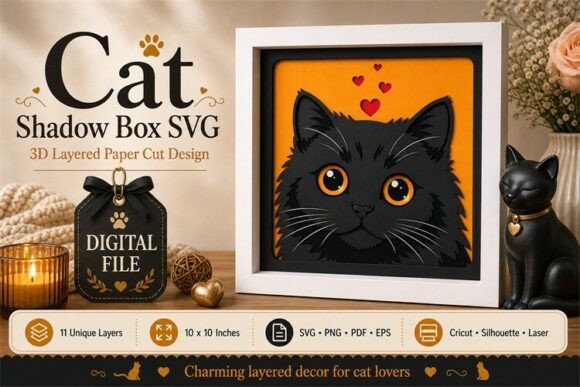
At its core, a shadow box design relies on the strategic stacking of materials to create depth. When applied to pet portraiture, specifically the Black Cat 3D Shadow Box SVG, the result is a charming interplay of shadows and highlights that flat images simply cannot achieve. The specific design featuring a fluffy black cat with soulful amber eyes and floating heart accents serves as a perfect case study for why this medium is so effective. It transforms a standard silhouette into a textured narrative, inviting the viewer to look closer at the details of the fur, the expression, and the whimsical elements surrounding the subject.
The Mechanics of Multi-Layered Design
To truly appreciate the value of an 11-layered charming pet art file, one must understand the engineering behind it. Unlike a standard vector cutout which consists of a single shape, a shadow box file is composed of multiple distinct layers, each slightly offset from the one beneath it. In the context of the black cat design mentioned, these eleven layers are not arbitrary; they are precisely calculated to mimic the natural volume of the cat's fur and the spatial relationship between the animal and the decorative hearts.
When assembled, these layers create a "parallax" effect. As light hits the frame from different angles throughout the day, the shadows cast by each layer shift, giving the static image a dynamic quality. This is particularly effective for black cats, whose dark fur can sometimes appear as a flat void in two-dimensional art. By using varying shades of black and charcoal across the eleven layers, the artist restores the texture and dimensionality of the coat, making the amber eyes pop with vibrant contrast. This technique requires high-quality files, typically provided in SVG format for cutting machines like Cricut or Silhouette, and high-resolution PNG files for those utilizing laser cutters or printing services.
Ideal Applications for Home and Business
The versatility of Shadow Box Cat Vector Art Framed Wall pieces makes them suitable for a wide array of environments. For homeowners, these designs serve as exceptional focal points in nurseries, cozy living rooms, or dedicated pet corners. The whimsical nature of the floating hearts adds a touch of warmth that resonates with cat lovers, often referred to affectionately as "cat moms" and "cat dads." Because the design is digital, users can customize the color palette of the paper layers to match their existing decor, swapping cool grays for warm browns or introducing pastel accents to soften the look.
For small business owners and creators, this type of asset represents a significant opportunity. Handmade home decor is a thriving market, and shadow boxes command a higher price point than standard prints due to the labor and material complexity involved. A creator can purchase a commercial license for the Black Cat 3D Shadow Box SVG and produce limited edition framed pieces for local craft fairs or online marketplaces. Furthermore, the digital nature of the product allows for scalability; the same file can be resized to fit anything from a small 5x7 inch desk frame to a large 24x36 inch statement piece without losing clarity.
Evaluating Suitability for Your Project
Before diving into a project involving layered vector art, it is essential to assess your tools and materials. While the concept is straightforward, the execution requires precision. Here are key factors to consider when determining if this approach fits your needs:
- Cutting Capability: Do you have access to a die-cutting machine (like Cricut Maker or Silhouette Cameo) or a laser cutter? These tools are necessary to cleanly cut the intricate details of the 11 layers, especially the fine lines representing fur texture.
- Material Selection: The success of a shadow box depends heavily on the paper stock. Cardstock between 65lb and 80lb is generally ideal. It is stiff enough to hold its shape and create distinct shadows but thin enough to stack eleven layers without becoming too bulky for standard frames.
- Frame Depth: Standard picture frames often lack the depth required for 3D art. You will need a "shadow box" frame with a depth of at least 0.5 to 1 inch to accommodate the stacked layers without crushing the top sheet against the glass.
- Adhesive Strategy: Assembly requires patience. Using foam adhesive squares or tabs between layers is crucial to maintain consistent spacing. Inconsistent spacing can ruin the lighting effect and make the layers look messy rather than intentional.
Navigating Limitations and Expectations
While the results are stunning, it is important to maintain realistic expectations regarding the process. Creating an 11-layered charming pet art piece is time-consuming. Aligning eleven separate cuts perfectly requires a steady hand and a well-lit workspace. For beginners, starting with a design that has fewer layers might be a prudent step before tackling the complexity of the black cat portrait. Additionally, the fragility of paper means these pieces are best displayed in areas protected from direct sunlight, which can fade the colors over time, and high humidity, which can cause the paper to warp.
Another consideration is the digital file format itself. Users should ensure they are downloading the correct file types for their specific workflow. The SVG files are optimized for vector-based cutting software, allowing for easy resizing and color manipulation within the program. Conversely, the PNG files, usually provided at 300 DPI with transparent backgrounds, are better suited for those who might be sending the design to a professional printing service or using a laser cutter that relies on raster images. Confusing these formats can lead to frustration and subpar results.
The Emotional Value of Pet Portraiture
Beyond the technical aspects, the true power of the Shadow Box Cat Vector Art Framed Wall lies in its emotional resonance. Pets are family members, and capturing their likeness in a medium that feels tactile and substantial honors that bond. The specific choice of a black cat with amber eyes taps into a desire to celebrate the unique beauty of these animals, which are often underrepresented in mainstream decor or subjected to superstitious stereotypes. By elevating the black cat to a subject of intricate, loving artistry, the design challenges perceptions and celebrates the "soulful" nature of the breed.
This form of art also serves as a therapeutic activity for many creators. The process of assembling the layers—peeling back adhesives, aligning edges, and watching the image emerge from a stack of paper—can be meditative. It offers a break from the digital screen, providing a tangible reward for effort. For gift-givers, the personal touch of a handmade shadow box conveys a level of care that mass-produced items cannot match. Whether it is a housewarming gift for a fellow cat enthusiast or a memorial piece for a beloved pet, the depth of the art mirrors the depth of the sentiment.
Final Thoughts on Implementation
In conclusion, integrating Shadow Box Cat Vector Art Framed Wall elements into your creative repertoire offers a blend of artistic satisfaction and practical utility. The Black Cat 3D Shadow Box SVG stands out as a prime example of how digital assets can be transformed into physical treasures. By understanding the layering mechanics, selecting the right materials, and appreciating the emotional weight of the subject matter, creators can produce work that is both visually striking and deeply meaningful.
Whether you are framing a piece for your own wall or building a inventory for a boutique shop, the key lies in attention to detail. Respect the intricacy of the 11 layers, choose your lighting wisely, and let the shadows do the work of bringing the character to life. In a world increasingly dominated by flat screens and digital interfaces, there is something profoundly satisfying about holding a piece of art that literally has depth, proving that sometimes, the best way to move forward is to build layer by layer.